


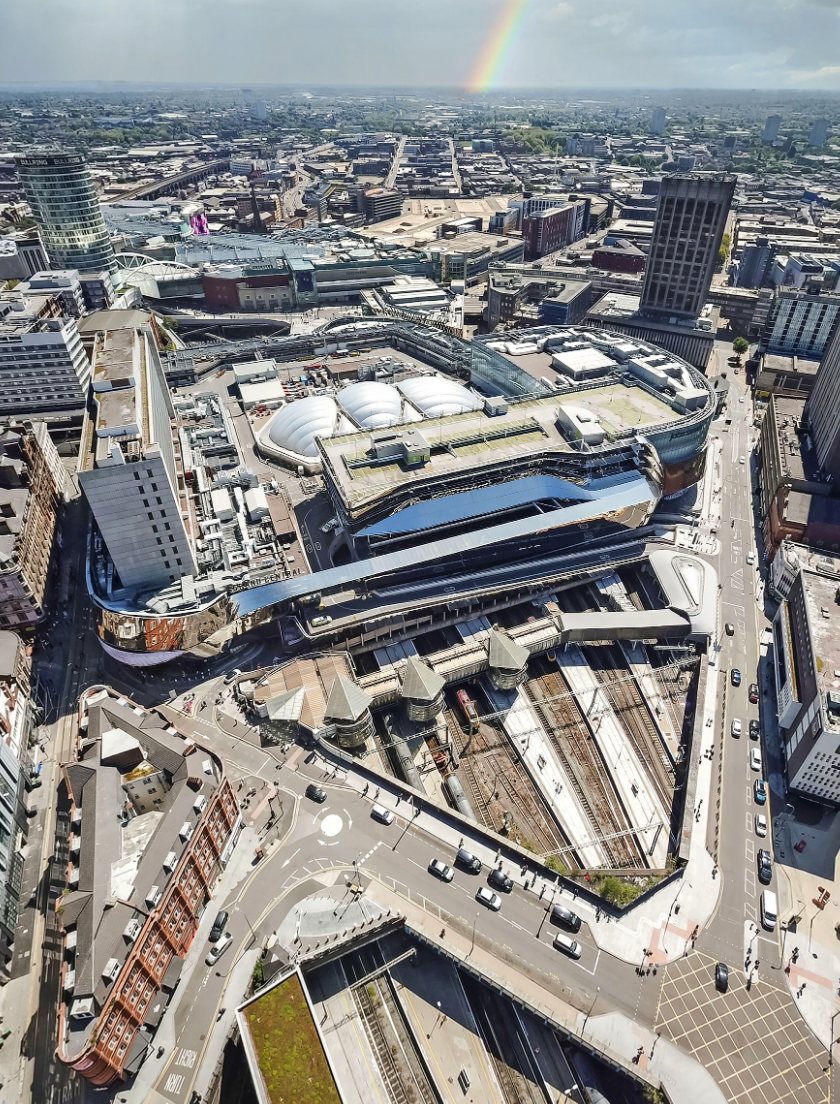
In the 1950s, if you walked north along Temple Street past St Philip’s Cathedral from Birmingham New Street to Snow Hill stations, you would be swapping a world of maroon signs for one of brown.
British Railways ran both stations and their branding had the same typeface, but their background colours differed according to the region within which the station lay.
Brown denoted the Western Region - chiefly those lines inherited at nationalisation in 1948 from the Great Western Railway. Maroon was the London Midland Region’s colour and its lines came mainly from the former London, Midland and Scottish Railway. Southern Region used green, with an area that comprised the old Southern Railway routes, while the Eastern Region used dark blue for what had been the London and North Eastern Railway from Doncaster southwards. The old LNER north of Doncaster became the North Eastern Region and adopted an orange-tangerine colour.
Nationalisation gave Scotland its own railway. With its light blue colour, it took lines from the LMS and LNER north of the border.
Thus, the unified BR split itself into six regions (later five when the NE Region folded into the Eastern Region). The differences gave some regional pride and hinted that nothing had changed when everything had changed. Eventually, the regional colours gave way to a single BR brand, with the double-arrow symbol that endures today, a new typeface (Rail Alphabet), and rolling stock colours dominated by blue.
Behind this increasing uniformity still stood the regional structure. Railway economic historian Terry Gourvish notes in British Rail 1974-97: “The linchpin of the basic railway was the multi-functional region, led by a regional general manager… The regions consisted of functional departments concerned with marketing, operations, engineering, finance, investment and personnel, all of which were replicated at headquarters. The general managers had complete control of nearly all the functions and activities within their geographic area, but because these boundaries did not coincide with the markets served, financial responsibility was very limited below Board level, engineering and ‘traffic’ managers were dominant, and the only person whose responsibilities embraced both costs and revenue was the Chief Executive (Railways).
“The situation followed on from the method of management accounting used. Although revenue and cost elements frequently crossed regional boundaries, an ‘originating’ basis was used whereby revenue was recorded and credited at the point of collection and costs were charged to the originating region.”
Gourvish is summarising the early 1980s, as BR and government continued their search for financial nirvana, which presaged the creation of rail sectors based on traffic rather than geography. These sectors were Inter-City, Provincial, London and South Eastern, Railfreight and Parcels. There followed debate about how to allocate costs to each sector, with decisions here making the difference between a sector being seen as profitable or not.
Jump forward into the 1990s, and those sectors have been further refined into smaller units fit for privatisation in the form of train operating franchises (with Railfreight split and sold outright).
Railtrack took over BR’s infrastructure before government sold it in 1996. It depended on income from operators (passenger and freight), with the Office of the Rail Regulator created to decide what charges those operators should pay.
Ideally, operators would pay all Railtrack’s costs and contribute to its investment funding. In reality, government never escaped the need to subsidise some rail operations and infrastructure costs. It paid this initially through train operators, before an outcry over these private operators receiving money made it shift to directly funding most of the infrastructure operator’s needs.
Today, that infrastructure operator is Network Rail and it’s still receiving hefty government grants.
Before the pandemic, the train operators were nominally making a profit. But when accountants added their share of NR’s grant to the overall equation, it emerged that only two covered their full costs - Intercity East Coast (LNER today) and South Western commuter services (South Western Railway today). Towards the end of the 2010s, the Department for Transport was receiving more in premium payments from some train operators than it was paying in subsidies to other operators, but this surplus was dwarfed by payments to NR.
Today’s private operators run under a panoply of colours about as far removed from Rail Blue as it’s possible to be. For the blue purist, the rot set in with sectorisation. It let dynamic managers such as Chris Green create ScotRail’s brand, before moving south with a can of red paint to create Network SouthEast from the London and South East sector. His revolution brought branding across stations, trains and publicity. Similar happened with InterCity, while Provincial became Regional Railways.
Yet Provincial faced a branding rival, and that was the Passenger Transport Executives created by government in 1974. There were seven based on major conurbations - Strathclyde, Tyne and Wear, West Yorkshire, South Yorkshire, Greater Manchester, Merseyside and the West Midlands. They developed strong branding, and their effect was more than skin deep because they also provided money to invest in rail.
In the West Midlands, the PTE (branded Centro but sometimes cruelly labelled ‘Wumpty’) invested to reopen the Snow Hill-Smethwick line and contributed towards the cross-city electrification project.
Greater Manchester provided almost half the money needed to build a link to Manchester Airport, while West Yorkshire funded a substantial part of the electrification project from Leeds out to Skipton, Ilkley and Bradford Forster Square. Strathclyde PTE opened a score of stations around Glasgow.
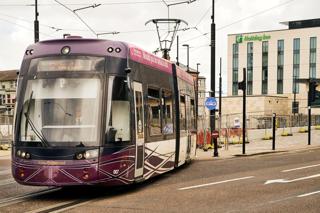
More recently, Greater Manchester has been investing in its Metrolink light rail system, but the role once played by PTEs in rail has diminished as central government gathered more powers for itself - particularly around investment decisions. There are hints of change in last May’s final publication of the Williams Review, now rebranded as the Williams-Shapps Plan for Rail.
Of devolution, it says: “Existing devolved authorities in Scotland, Wales, London, Merseyside, and Tyne and Wear will continue to exercise their current powers and to be democratically accountable for them. They will continue to award contracts and set fares on their services, for instance. As now, devolved rail authorities will need to work together in partnership with Great British Railways. This includes supporting a single national network, including one website and app and delivering consistent branding and passenger standards, such as on accessibility and compensation.”
The canny will note the similarities between Gourvish’s view that British Rail’s costs and revenues only came together on its chief executive’s desk and the Williams-Shapps view that “Great British Railways will bring the railways’ finances together in a single organisation across track, train and the rail estate.”
It then explains: “The costs of the railways will become more transparent and visible for government, taxpayers and investors.”
As ministers took ever-tighter control of rail, for example by specifying fare rises and controlling investment decisions over recent years, it seems they never noticed that they had substituted their desks for that of BR’s chief executive. In future, it will be the desk of GBR’s chief executive at which costs and revenues collide (or, perhaps, miss).
Williams-Shapps also says: “New partnerships between Great British Railways and local and regional government will be established to give local leaders a greater say in how the railways are run in their area. For the first time, these agreements will encompass the whole passenger offer and long-term strategy for railways in a local area.
“Depending on the needs and capacities of different places, partnerships will include the ability for local leaders to integrate ticketing and fares with other local transport services, control stations, and buy additional services or infrastructure to achieve local transport and housing priorities more effectively than today, using funds raised locally. Local railway managers will be scrutinised by local politicians through joint governance arrangements to provide clear accountability locally in areas where such arrangements are appropriate.”
Centro’s successor is Transport for the West Midlands, which is part of the West Midlands Combined Authority, itself formed of seven local councils as full voting members plus a further ten councils and three Local Enterprise Partnerships. West Midlands Mayor Andy Street chairs the combined authority.
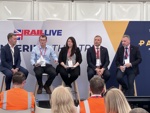
Transport for the West Midlands Rail Director Malcolm Holmes explains his reaction to the Plan for Rail’s comments on devolution to RailReview: “The ambition that’s contained in the rail review is good, there’s some really positive ambition. I was steeling myself to be underwhelmed by the plan when it was ultimately published, but I was wrong. It was more ambitious that I was expecting and I’m quite happy for it to be that way.
“When it comes to local control, though, I have some worries. There are lots of warm words and positive statements, and lots of uses of the ‘p’ word - partnership. But it is very light on policy detail. My concern is that when we begin to explore the detail of what that looks like, I suspect that won’t necessarily reach our ambitions. I think it’s a long way from there being any options for further devolution.”
Holmes explains why his region wants more devolution: “It’s economic and it’s about connectivity. The rail network in the West Midlands is a very significant economic asset that supports the effective economic functioning of Birmingham and the wider region.
“Before COVID hit, actually back in 2017, rail became the most dominant mode for city centre peak-time commuting into Birmingham. It was huge in terms of its importance to the functioning of the economy.
“The very basic argument for more local control is that decisions over suburban and commuter rail networks into our towns and cities ought to be made locally and be accountable to local politicians, rather than accountable to ministers in Whitehall, because we’re close to it. For me, personally, I know every station in the West Midlands and I know every route.
“Civil servants are great people and there’s a lot of amazing talent in the DfT, but they can’t be expected to know what it’s like to travel from Cannock into Birmingham in the morning peak - it’s not reasonable.
“But further than that, and this is something where government does make positive noises, it’s about integration across transport modes.
“We’d like to have a solidly integrated transport system in the West Midlands. The West Midlands Railway brand is very much part of that, and with our West Midlands bus brand, our West Midlands metro brand, our cycling and walking brands, and the overarching Transport for the West Midlands brand - very much the TfL model - we’re trying to get the ticketing right through the Swift smartcard.
“But it’s difficult to run an integrated transport system, even to market an integrated transport system, if the control of one of the elements is divorced from or remote from the rest of the network.”
At Transport for the North, Rail Director David Hoggarth takes a similar view of the Plan for Rail: “We’ve broadly welcomed the review. There’s a lot in it that we were looking for - particularly joining up track and train, which is absolutely fundamental and one of the key issues following privatisation and over the years as things have become more fragmented.”
Hoggarth praises the plan’s introduction of a guiding mind and more accountability, arguing that despite the passionate commitment from many rail people, they work in a system that blunts their effect and makes it hard to see where decisions are taken and strategies made.
“There’s a recognition that there’s a role for sub-national transport bodies such as Transport for the North, but I think that isn’t as clearly defined at this stage as we would have expected. It’s an opportunity for us to engage with the transition team as we’re doing with Network Rail and the DfT to try and develop that role.”
He argues that TfN can help GBR: “It’s about cementing our role and our partners’ role in the North, now that we’ve established a track record of working with the industry. In a way, we’re a ready-made partner for GBR. I think the other side of it is that we are multi-modal because we have a strategic transport plan that looks 30 years ahead, and that’s a good link with the GBR strategy. We can bring that multi-modal strategy, underpinned by really strong evidence. We’re doing rail in the real world.”
For Holmes, much depends on the shape of future relationships. At the moment, he has a good relationship with Network Rail’s route that runs the tracks around the West Midlands. And TfWM helped form the West Midlands Trains franchise that runs his local services.
“It will be interesting to see where that balance of influence and power goes in the future. I’m optimistic we’ll find a way to get that balance right, but there’s a lot unknown,” he says.
Of course, Birmingham and its surrounding area has more than one rail operator, and this calls for more co-operation. There was some interest in one passage in the Plan for Rail which said: “Local teams will be well placed to improve co-operation with local communities and local leaders. A pilot of integrated local teams will be undertaken as a priority.”
Holmes tells RailReview that he thinks that’s more about rail industry partnerships rather than devolution. But if he’s wrong, he has a decent contender for a pilot of integrated local teams… and that is the West Midlands Grand Railway Collaboration.
He says: “It started off life as a supervisory board, but it was always intended to be more than that in the West Midlands. It is gaining a life of its own, particularly in this new environment, in bringing Network Rail and train operators with us together in the region to make the rail network function better for passengers. So, we’re already a bit ahead of the game in this space.
“That’s important in a region like the West Midlands because we have five train operators, with Great Western Railway on the edge in Worcestershire as well. That’s six operators that come together to create our network of services.
“If you have six operators, certainly in the current model, you have six different means of accessing ticketing and information, six different cycle policies, six different sets of peak-time ticket restrictions, and so on. From a customer perspective, it doesn’t feel much like one network, so the Grand Railway Collaboration is designed to take a whole industry approach to how we manage the rail network in the West Midlands.”
That variation is something that GBR should be ideally placed to remove, but there’s a risk that GBR pushes too far and re-creates the era of Rail Blue. The double-arrow symbol of that era endures and features on every UK station and on tickets. The only place you don’t see it is on rolling stock. Perhaps that will change.
This is a tricky area. Privatisation receives criticism for fragmenting the network with too many operators and too many brands. But there are strong brands out there: ScotRail is one whose name dates back decades, while more recently LNER and GWR have established very strong brands.
Holmes acknowledges the influence of Transport for London’s brand in the one the West Midlands developed. It now adorns trains and stations, and the organisation’s website includes the line: “When you see the diamonds, you’re near transport in the West Midlands.” More widely, the logo decorates 12,500 bus stops, so it’s not something that GBR could - or should - dismiss lightly.
Holmes tells RailReview: “I do support GBR having a national brand and the retention of the BR double-arrow symbol. Having said that, I think there is opportunity. Even under BR, there was opportunity for local branding within that, so the question is not ‘if’ but ‘how’ we join the two together.
“There has to be a state where the two live in harmony and complement one another. When I was at London Overground, every station had the double-arrow symbol outside it as well because it was part of the national rail network, and all the suburban stations in the West Midlands will remain part of the national rail network.
“They all have the double-arrow symbol on them today, and they all have the West Midlands Railway symbol because it’s the symbol of our local rail network. That model works, so something that looks like that will be good.”
If it has the brand, does it have the money to invest in the way that Centro once did? The short answer is no. There is a transport levy that TfWM could raise from local authorities, but Holmes argues that its taxation powers are limited.
“So, money has to flow from central government. In fact, it did that back in Centro days - there was a rail grant that let them decide how they were going to fund in terms of local rail services. That rail grant disappeared in 2007.”
Should it come back?
“Well, it depends on the model you choose for the partnership. If some of the money could be channelled through local bodies to pay for rail services, I think that makes a huge difference. Organisations respond to who’s paying them. So, if there’s opportunity to give us power in the future by passing through funding to us, that’s a huge opportunity and would reflect the importance of the rail network to the region. There would certainly be opportunities there.”
Transport for the North covers a wider area than its West Midlands counterpart. Within its boundaries sat several PTEs, and today it covers several city regions. This prompts Hoggarth to a different view of funding by joining up investment from different bodies, public and private, in a virtuous circle.
“We all know it’s been difficult dealing with the rail industry, not only for local authorities but also for private sector investors,” he tells RailReview.
“That would include not just new stations, but investment in existing stations, which is an area where we could pilot more devolution because stations should be part of the community.”
And Hoggarth has a different view of future geography. Holmes has Birmingham as the centre of TfWM’s network, but Transport for the North has several city hubs, including Liverpool, Manchester and Leeds. They straddle the Pennines and sit in different Network Rail regions. Greater Manchester Mayor Andy Burnham has argued recently for a single region linking both sides of the Pennines.
Hoggarth says: “We’re very clear that GBR needs to work right across the North, so there’s a question about the regions that have been created. We’d definitely like to see a single regional route for the North. That’s been a long-standing view and it’s good to see a nod to it in the White Paper, albeit perhaps on a longer timescale than we would like because it talks about Northern Powerhouse Rail being the opportunity. That is definitely something we want to pursue.”
He adds: “This is the time when there is change within the industry, so this is an opportunity to grasp that and do something different. We know the arguments for and against because we’ve been through them before. You will end up creating a different set of interfaces, but our argument is that east-west is critical to what we do, not that we don’t value north-south and HS2 and London services. But the gap that’s existed has been east-west connectivity, and that’s why we came into existence - to make the case for that connectivity.”
NPR is TfN’s proposed new east-west line that’s designed to speed up journeys on that axis. It uses 80km (49.7 miles) of HS2’s planned tracks and so needs that project to go ahead. NPR is also a reason why TfN would keep Northern and TransPennine Express separate as operators.
Hoggarth explains: “When we did our original proposal together back in 2014, we did advocate putting Northern and TPE back together because we identified some efficiency savings in doing that. Having said that, the view at the time was that it was better to keep them apart because of the ambition we shared of making TPE the inter-city operator of the North. Looking at the new trains and the ways it has developed the routes, you can see how that has really helped.
“I think there’s a further stage in developing that inter-city operator towards Northern Powerhouse Rail, so we will need to see how that pans out on the back of the Integrated Rail Plan.”
Couple this with TfN’s wider 30-year strategy and it’s easy to see why Hoggarth argues that TfN is an ideal partner for GBR. It’s done much of the hard work already, it’s collected evidence, and it’s given an informed view that’s been past local politicians.
What is also clear is that putting aside their desire for devolution in general terms, TfN and TfWM share some approaches but differ in others. What fits one will not necessarily fit another. That’s the biggest devolution lesson. And history suggests that how you define relationships and place boundaries is difficult in a national rail network.ν




Login to comment
Comments
No comments have been made yet.