


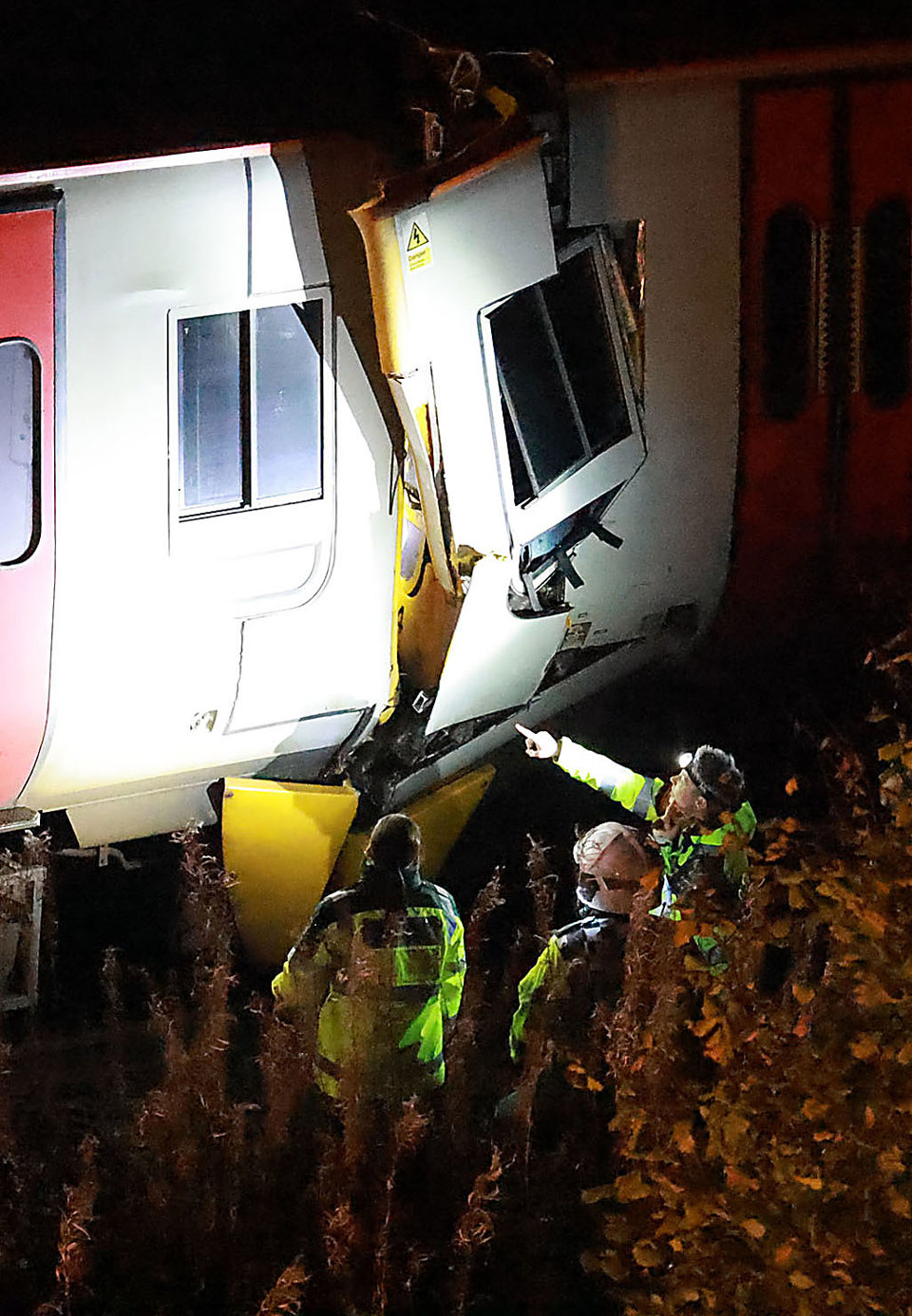
As investigators arrived to examine October 21’s collision between two Transport for Wales Class 158 passenger trains, it had all the hallmarks of an autumn adhesion problem.
Confirmation came in barely 24 hours later, with the Rail Accident Investigation Branch (RAIB) revealing on the evening of October 22 that it had found evidence that “wheel/rail adhesion was relatively low”.
As investigators arrived to examine October 21’s collision between two Transport for Wales Class 158 passenger trains, it had all the hallmarks of an autumn adhesion problem.
Confirmation came in barely 24 hours later, with the Rail Accident Investigation Branch (RAIB) revealing on the evening of October 22 that it had found evidence that “wheel/rail adhesion was relatively low”.
Damp conditions and leaf-fall form the railway’s equivalent of a motorist’s winter black ice. Brakes become less effective, or ineffective. Trains slide rather than stopping, with RAIB suggesting this was the case at Talerddig.
There are ways to combat the problem. Network Rail runs railhead treatment trains that use powerful water jets to clean contamination away, and it cuts back lineside trees where it can. Trains have wheel slip protection systems and can lay sand to help regain braking (or help with traction when accelerating from a stop).
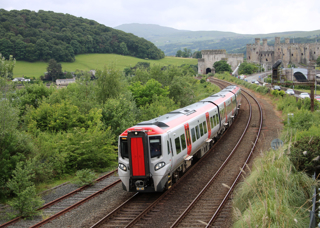
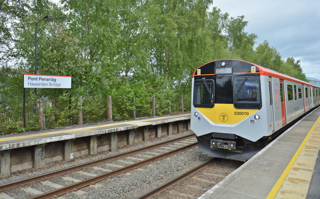
From what we know of October 21’s incident, the driver of the westbound train (the 1831 Shrewsbury-Aberystwyth, headcode 1J25) told the signaller that they were unable to stop at Talerddig Loop and passed MH1078 signal at danger. The driver said, I understand, that this was due to railhead conditions.
The westbound train then continued helplessly down the 1-in-56 single-track gradient towards Llanbrynmair, striking head-on the eastbound 1909 Machynlleth-Shrewsbury (headcode 1S71).
Unlike the fatal collision on the single line at Cowden (Kent) in October 1994, there’s little question of the driver missing the signal that controls trains leaving the loop.
Network Rail’s line runs under European Train Control System (ETCS) signalling, which means there are no traditional ‘lights on sticks’ signals.
Instead, ‘movement authorities’ reach the train by radio for display on screens in front of the driver. ETCS will brake the train to a safe stop automatically before reaching the end of a movement authority, even if the driver takes no action.
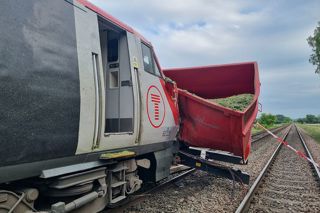
But brakes are powerless to stop a sliding train. This was the case at Salisbury in October 2021, when a South Western Railway Class 159 ran away through a red signal and collided with a Great Western Railway Class 158 on Salisbury Tunnel Junction (RAIL 944).
RAIB’s report subsequently said the line on which the SWR train approached had very low wheel/rail adhesion conditions. It reported that the wheel slip protection and sanding systems on the SWR worked as they were designed to, but that Network Rail had cancelled that day’s run of its railhead treatment train.
RAIB will doubtless be testing similar systems aboard TfW’s westbound train. Information from Realtime Trains shows that NR’s daily railhead treatment train ran as planned the evening before the accident.
In its Salisbury recommendations, RAIB called on NR to more effectively manage the risk of low adhesion - including by developing more specialist staff, by using data better to support operational decisions designed to mitigate the effects of low adhesion, and by increasing its understanding of effectiveness of railhead treatments.
RAIB also called on SWR to improve the way it trains drivers to identify areas of poor adhesion and report them.
Login to continue reading
Or register with RAIL to keep up-to-date with the latest news, insight and opinion.



Login to comment
Comments
No comments have been made yet.